
There is a moment in every beginner’s crypto journey when they hear the phrase “liquidity pool” and pause for a second, wondering who came up with such a serious-sounding name. It happened to me too, and I remember the exact feeling. I was scrolling through a DeFi dashboard one evening, trying to understand how people were earning interest far higher than what traditional banks paid. Right there on the screen were different pools: ETH-USDC, BTC-ETH, SOL-USDT.
I must confess, I stared at them like someone standing in front of a long buffet table, not knowing what half the dishes were. Yet everyone around looked so confident. They were “providing liquidity,” “earning yield,” and “farming rewards” as if it were as simple as checking email. But when I finally understood it, something clicked. Liquidity pools were not mysterious at all. They were simply the backbone of decentralized finance, a quiet but powerful system that lets people trade crypto instantly, 24 hours a day, without a bank, broker, or middleman. And if you want to earn passive income in DeFi, understanding liquidity pools is essential. So let me walk you through this world in a plain and warm manner. The same way one friend would explain something valuable to another.
- Not hype.
- Not fear.
- Just clarity.
────────────────────────────────────────
The Simple Idea Behind Liquidity Pools
Imagine a busy marketplace where people are buying and selling. Money is flowing from one hand to another. Now imagine that the market stalls only function because a group of people contributed goods at the start of the day. Without those initial goods, the market would be empty. No transactions. No business. No market. That is exactly how decentralized exchanges work. Except instead of tomatoes, gadgets, or fabrics, people contribute crypto.
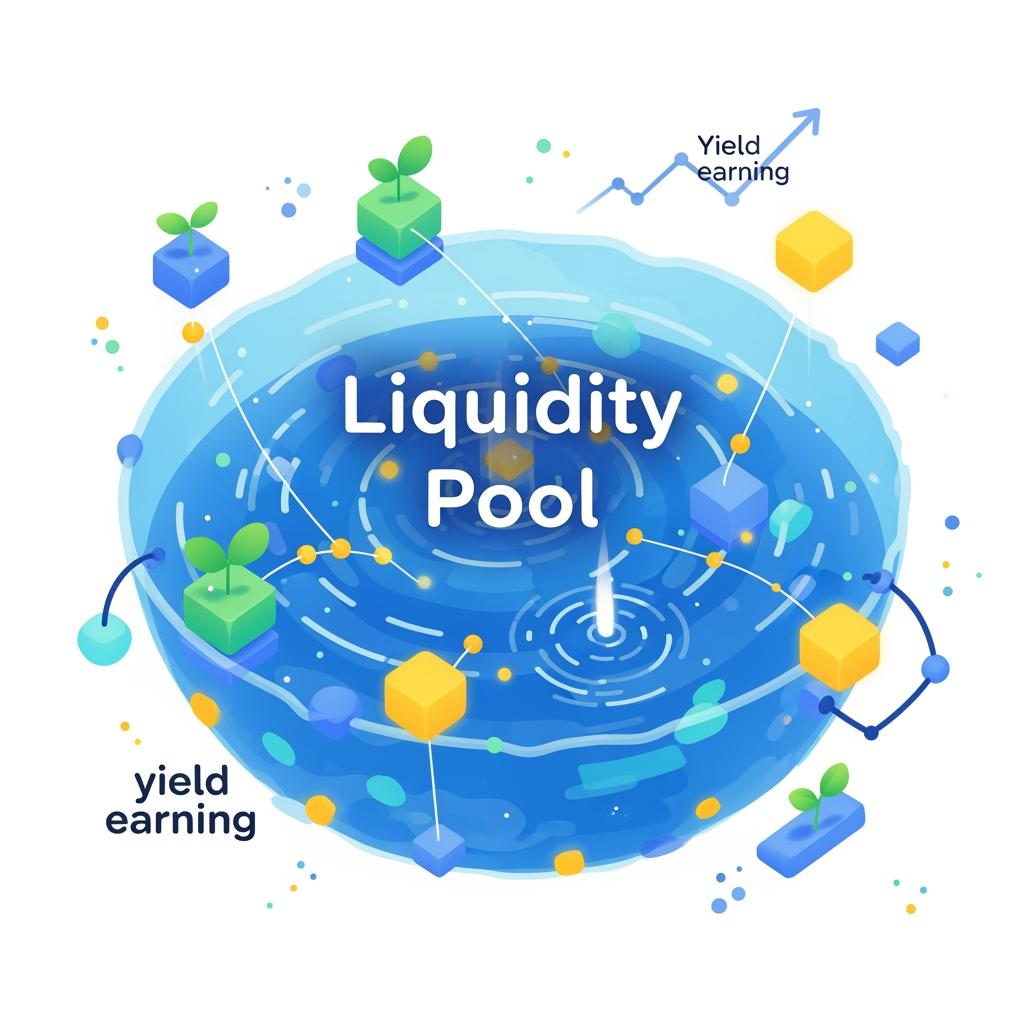
A liquidity pool is a large pot of crypto that allows people to trade smoothly. If someone wants to swap Ethereum for USDC, the pool provides the assets immediately. No searching for a direct buyer, no waiting, no matching of orders. The pool handles it instantly. And the individuals who contributed to that pool known as liquidity providers earn a share of the trading fees. This is the foundation of yield earning in DeFi.
────────────────────────────────────────
Why Liquidity Pools Exist
Traditional exchanges, like stock markets, use what’s called an order book system. Buyers list what they want to pay. Sellers list what they want to receive. The system matches them.
But this method struggles when:
• There are too few traders
• The market is quiet
• Prices move fast
• The asset pair is uncommon
• A platform is decentralized and global
Decentralized finance required a different model, one that does not depend on human buyers and sellers being online at the same moment. So developers created automatic systems called Automated Market Makers (AMMs). And these AMMs rely entirely on liquidity pools.
- No pool = no trading.
- No trading = no DeFi.
- No DeFi = no yield earning.
It’s that simple.
────────────────────────────────────────
How Liquidity Pools Actually Work (The Human Explanation)
Let’s say there is an ETH-USDC liquidity pool. For the pool to work, it must contain equal value of both assets. For example:
• $500,000 worth of ETH
• $500,000 worth of USDC
This $1 million pool allows people to swap ETH for USDC and USDC for ETH anytime. Now here is where you come in. If you deposit, say:
• $1,000 worth of ETH
• $1,000 worth of USDC
You become one of the liquidity providers in the pool. In return, you earn a portion of the trading fees generated by everyone swapping those tokens. Some platforms also reward you with extra tokens, known as liquidity mining rewards but that varies by project. This is why people participate: You earn yield because you are helping the system function. You are not being paid randomly, you are being compensated for providing the fuel that keeps decentralized exchanges alive.
────────────────────────────────────────
Where Does the Yield Come From?
The yield comes from three major places:
1. Trading Fees
Every time a trade happens, the system takes a small fee often 0.1% to 0.3%. Those fees are shared among all liquidity providers. The bigger your share of the pool, the larger your earnings.
2. Liquidity Mining Rewards
Some platforms issue native tokens as incentives. For example:
• Uniswap may give UNI tokens
• Curve may give CRV tokens
• PancakeSwap may give CAKE tokens
This is optional and depends on the protocol you are using.
3. Yield Stacking
Some platforms allow you to stake the tokens you receive as rewards, creating multiple income layers, what people call “yield stacking.” But remember, higher yield often comes with higher risk and understanding the risks is just as important as understanding the rewards.
────────────────────────────────────────
The Famous Risk: Impermanent Loss (Explained Without Confusion)
If there is one phrase that intimidates beginners, it is “impermanent loss.” The name sounds like something designed to discourage people from participating, but it is far simpler than it appears.
Let me explain it through a short story.
Imagine you put the equal value of ETH and USDC into a liquidity pool. ETH is priced at $2,000 at the time. Now suppose the price of ETH rises sharply, maybe to $3,000. Inside the pool, an automatic process keeps the ratio balanced. That means part of your ETH gets swapped into USDC.
If you had held your ETH outside the pool, you would benefit fully from the price increase, but inside the pool, your exposure is diluted. This difference is the “loss.” But it is not always a true loss. If prices return to their original level, the difference disappears, hence the term: impermanent. It only becomes permanent if you withdraw your liquidity at the wrong time. This is why liquidity pools require discipline. They are not designed for short-term speculation. They reward patience.
────────────────────────────────────────
Why Liquidity Pools Matter for the Future of Finance
Many people outside crypto do not realize that liquidity pools changed the architecture of financial markets. Before them, the idea of swapping assets globally without a bank was almost impossible.
Liquidity pools enabled:
• Permissionless trading
• Faster transaction settlement
• 24/7 automated markets
• Global access for anyone
• Yield opportunities outside traditional banking
• Entire ecosystems like DeFi, NFTs, and tokenized assets
They are not just pools of tokens, they are the silent infrastructure powering billions of dollars in daily transactions. If Bitcoin introduced the idea of decentralized money, liquidity pools introduced decentralized markets.
────────────────────────────────────────
Examples of Popular Liquidity Pool Platforms
To make things clear, let’s look at well-known platforms:
Uniswap
The pioneer of AMM-based liquidity pools.
Simple, decentralized, and widely trusted.
PancakeSwap
Built on Binance Smart Chain. It's popular because of low transaction fees.
Curve Finance
Specializes in stablecoins. Designed for very low slippage and efficient swaps.
Balancer
Allows custom pool ratios, not just 50/50 pairs.
SushiSwap
Similar to Uniswap but with additional rewards.
These platforms together form the backbone of decentralized trading.
────────────────────────────────────────
How Beginners Can Participate Safely
These steps can help you engage with liquidity pools responsibly:
• Start with stablecoin pools
They carry lower volatility and less risk of impermanent loss.
• Understand the pool pair
Know how both assets behave.
• Observe the fee structure
Higher fees can mean higher rewards.
• Begin with small amounts
Treat it as learning, not racing.
• Avoid obscure tokens
Liquidity pools containing unknown tokens can collapse overnight.
• Monitor price divergence
This helps manage the risk of impermanent loss. Entering liquidity pools should feel intentional, not rushed.
────────────────────────────────────────
A Way to Think About Liquidity Pools
Imagine a coastline with two lighthouses. One represents the crypto you provide and the other represents the crypto people want to trade.
- Your contribution helps ships navigate that water.
- You keep the market alive.
- You keep the movement flowing. In return, the system rewards you.
That is the simplest way to understand it. Liquidity pools are not just technical structures, they are coordination systems powered by ordinary people. They reflect a quiet truth about finance: When people contribute together, value circulates more smoothly.
────────────────────────────────────────
The Future of Liquidity Pools (2025 and Beyond)
Several trends are already reshaping how pools work:
• Smart pools that adjust ratios automatically
These reduce impermanent loss.
• Cross-chain pools
These allow trading across different blockchains.
• Institutional liquidity
More companies are adding liquidity, increasing stability.
• Tokenized real-world assets entering pools
Real estate, commodities, and even energy credits may soon be part of liquidity pools.
The world is moving toward programmable markets and liquidity pools are the foundation of that shift.
────────────────────────────────────────
Final Reflection
There is something remarkable about liquidity pools. They allow anyone, whether you are in Lagos, London, New York, or Toronto to participate in global finance without needing a banker, a broker, or a gatekeeper. They represent a future where access is not limited by location, background, or institutional relationships.
All you need is knowledge, caution, and a sense of curiosity. And if someone had explained liquidity pools to me this simply when I first stumbled into the DeFi space, I would have approached it with much more confidence. Now you have that clarity. The next step is yours to decide.