
Let me start with a quick story. One of my guys once told me, “I bought this coin because everybody was shouting about it.” He didn't conduct any research. No understanding, it was just the Twitter noise. Two weeks later, the coin dropped like it forgot something upstairs. He came back confused. “But people said it was strong.” I asked him one simple question:
“Do you even know the tokenomics?” Silence. That right there is where many people miss it. They understand the hype and they understand the price, but they don’t understand what’s behind the coin.
Tokenomics is that “behind.” And if you don’t understand it, you’re basically entering a game without knowing the rules.
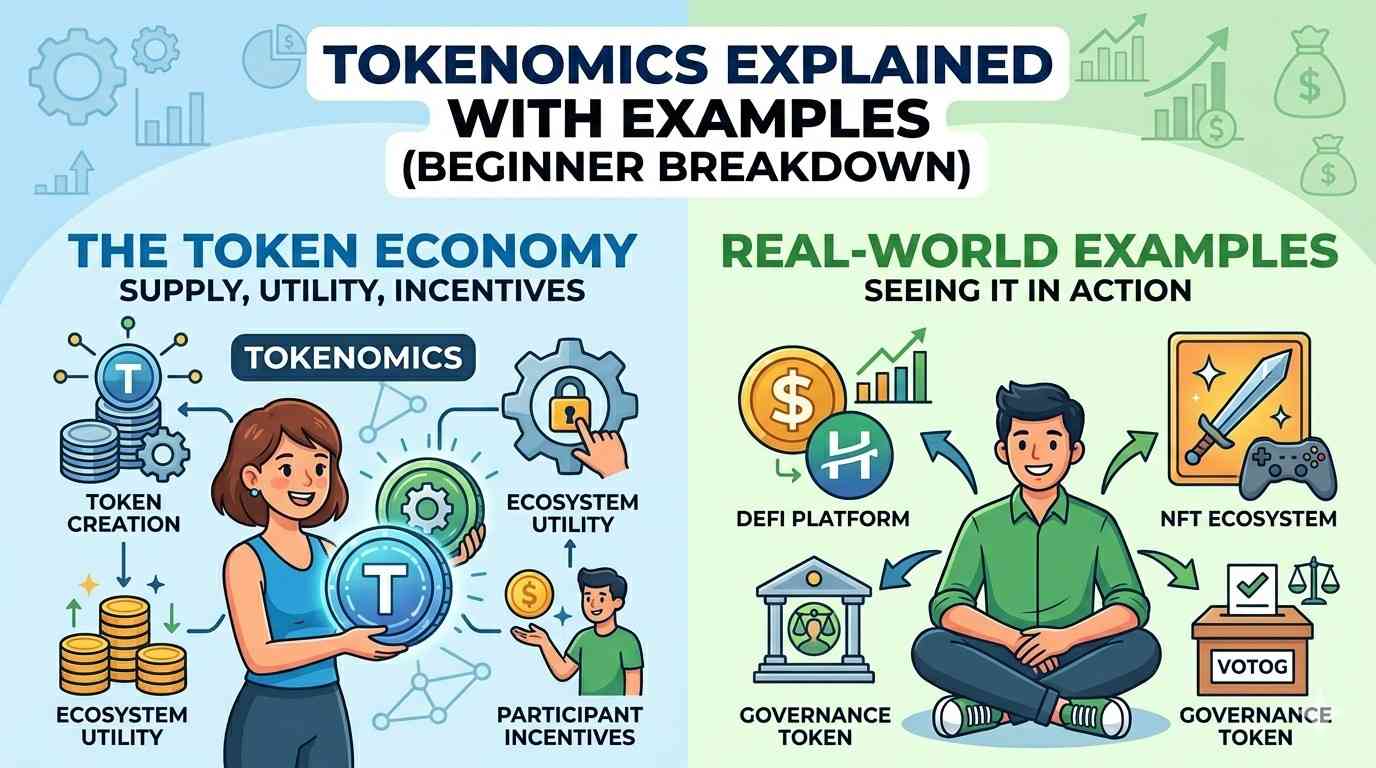
So… What Exactly Is Tokenomics?
Let’s not complicate this. Tokenomics is just how a cryptocurrency is designed to work, that’s it. How many tokens exist.
How they are distributed.
What they are used for.
How new ones are created or removed.
Think of it like this. If a coin is a country, tokenomics is its economy and just like in real life, if the economy is messy, things won’t go well.
Why Tokenomics Actually Matters
Most beginners focus on one thing. The price.
“Is it going up?”
“Is it cheap?”
“Can it 10x?”
But price alone doesn’t tell you anything. A coin can be cheap and still be useless. Another can look expensive but be solid long-term..Tokenomics helps you understand why a coin moves the way it does, not just what it’s doing.
Supply: The First Thing You Should Always Check
Let’s keep this simple. Supply means how many tokens exist. Some coins have limited supply and some don’t. For example, has a fixed supply, like Only 21 million will ever exist. That scarcity is part of why people value it. Now compare that to a coin with billions or even trillions of tokens. Even if demand increases, the large supply can slow down price growth. It’s like trying to make something valuable when there’s too much of it.
Circulating Supply vs Total Supply
This one confuses many beginners. Total supply is all the tokens that exist. Circulating supply is what’s currently available in the market. The difference matters a lot. Imagine a project has 1 billion tokens total but only 200 million are in circulation. That means the remaining 800 million could enter the market later. And when they do? There is going to be a price pressure because more supply enters without necessarily increasing demand.
Token Distribution (Who Holds What?)
This part is very important but many people ignore it. Who owns the tokens? If a small group holds a large percentage, that’s risky because they can sell at any time. And when they sell big? The price will drop so fast. You’ll hear terms like:
Team allocation.
Investor allocation.
Public sale.
If most of the tokens are not in public hands, you should be careful because you’re not in control.
Utility: What Does the Token Actually Do?
Let’s be honest. Some tokens exist for no real reason. They just ride the hype but strong projects usually have utility. Meaning the token has a purpose. For example, it is used to pay for transactions and run smart contracts. That gives it real use and If a token has no clear function, you’re basically betting on hype and hype doesn’t last forever.
Token Burns (Reducing Supply Over Time)
Some projects try to increase value by reducing supply. They “burn” tokens. Meaning they permanently remove them from circulation. Less supply can increase scarcity and scarcity can support prices. But here’s the thing. Burning tokens alone doesn’t make a project good. If there’s no demand, Reducing supply won’t save it.
Inflation vs Deflation
This sounds technical, but it’s simple. Inflation means more tokens are being created. Deflation means supply is reducing. If a token keeps increasing supply without strong demand, the price can struggle. But if supply is controlled or reduced, it can support long-term growth. So, balance matters.
Real Example: Why Some Coins Pump… Then Dump
You’ve probably seen this.
A new coin launches, the price shoots up quickly. Wveryone gets excited, then suddenly it crashes. Why? It's tokenomics. Early investors got tokens cheap and when the price rises, they take profit. Large sell-offs happen. If the token distribution is not balanced. This cycle repeats and late buyers get stuck.
Another Real Scenario
Let’s say two coins look similar. It has the same hype and same community. Coin A has limited supply, strong utility, and balanced distribution, then coin B has huge supply, unclear use, and heavy insider ownership. Both might pump short-term, but long-term? Coin A has a better chance of surviving. That’s the difference tokenomics makes.
The Mistake Most Beginners Make
They enter because of noise.
“This coin is trending.”
“Everyone is talking about it.”
“It’s still early.”
But they don’t check the supply, distribution and utility. So they’re reacting, not understandingnd in crypto, reacting late is expensive.
How to Start Thinking Differently
You don’t need to become an expert overnight. Just start asking simple questions:
How many tokens exist?
Who owns them?
What is the use case?
Is supply increasing or decreasing?
These questions alone will already put you ahead of many people.
One Personal Observation
The more I paid attention to tokenomics, the less I chased hype. Not because hype disappeared but because I started seeing what’s behind it. Some projects looked exciting on the surface, but are so weak underneath. Others looked boring, but had strong fundamentals. That shift changes how you invest.
The Bigger Picture
Crypto is still evolving and new projects will keep coming. New narratives will keep forming. But one thing remains constant. If the economics behind a token are weak, it won’t last. No matter how loud the marketing is.
Final Thought
Tokenomics is not something to ignore. It’s not advanced knowledge meant for experts. It’s a basic understanding because at the end of the day, you’re not just buying a coin, you’re entering a system. And if you don’t understand how that system works, you’re just guessing. Sometimes you’ll get lucky, but most times?
You won’t. So slow down, look beyond price ask better questions because once you understand tokenomics, you stop chasing noise and start making decisions that actually make sense.