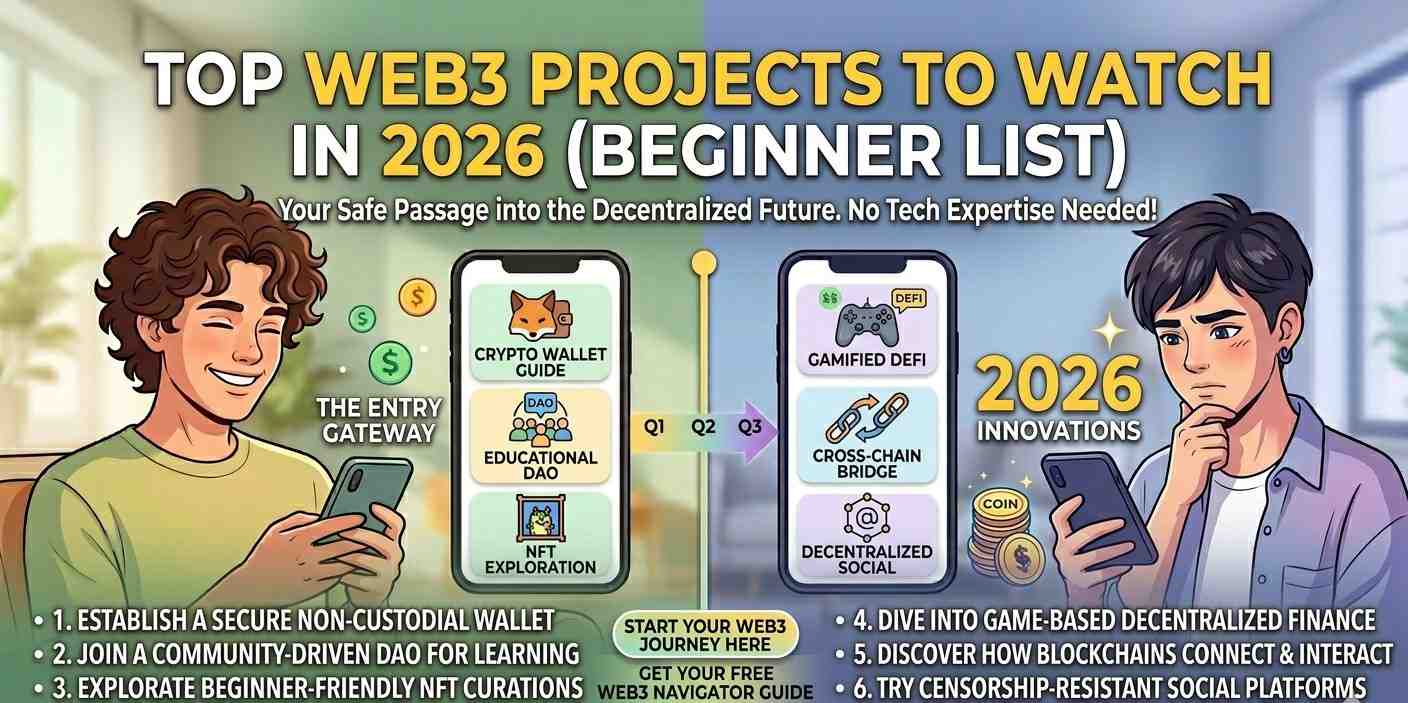

Let me say something that might sound controversial, especially if you’ve been in crypto for a while. Most people shouting “Web3 is the future” don’t even understand what they’re holding. They are just following the noise. One influencer tweets, everybody run to it. Another one posts one thread, suddenly that project is “the next big thing.” No research, no patience at all. And when the market humbles them, they’ll say, “crypto is a scam.” no, you just entered blindly.
So let’s calm down and talk properly because Web3 is not just hype. There’s real innovation happening. But you have to separate signal from noise. Especially if you’re just starting. You don’t need 50 tokens, you don’t need to chase every airdrop like your life depends on it. You need a simple watchlist of solid projects with clear use cases. Things that actually make sense even if the market decides to misbehave short-term.
Before we jump into names, let’s align a little.
Web3, in plain English, is just the idea that the internet should not be controlled by a few big companies. Instead of one company owning your data, your identity, your money, the control shifts to users. Sounds nice, right?
But execution? That’s where the real battle is. I remember when I first entered this space, everything looked exciting. Every project had a fancy website and every founder was “building the future.” Every token was “undervalued.” I was like, “ there is money to make here.” Then reality entered. So now, when I look at projects, I don’t look for hype again, I look for usefulness because hype can pump your portfolio temporarily. Usefulness is what sustains it.
Let’s talk about some Web3 projects worth watching in 2026 especially if you’re still trying to understand the space without losing your sanity.
The Backbone That Refused to Die
If Web3 was a city, Ethereum would be the main road. Everything passes through it. DeFi, NFTs, Smart contracts, most projects still build on it. Now, people complain about gas fees. True, but the upgrades over the years have improved things gradually. And more importantly, the ecosystem is massive. The evelopers trust it and that matters.
For beginners, Ethereum is like your foundation, not the most exciting anymore, but very hard to ignore.
Speed
Solana feels like that young guy that came into the industry and said, “all of you are too slow.” Fast transactions with low fees. Very attractive, especially for users that don’t want stress. But let’s not pretend it’s perfect. Network outages have happened before and that’s the risk. Still, the community is strong, and projects keep building on it. In Web3, momentum matters and Solana has it.
Quietly Fixing Ethereum’s Problems
Not all heroes make noise. Arbitrum is one of those projects working behind the scenes. It’s a Layer 2 solution, which simply means it helps Ethereum become faster and cheaper without replacing it. Think of it like adding extra lanes to a busy highway. The traffic reduces and the movement improves.
For beginners, this is important because the future is not just one blockchain winning, it’s ecosystems working together.
The Plug Connecting Everything
This one confuses many beginners, so let me simplify it. Blockchains can’t access real-world data on their own. Chainlink helps them do that. Prices, weather data and events. All those external things that smart contracts need to function properly. Chainlink is the bridge. It’s not flashy, but it’s essential.
And in tech, essential things tend to last.
The Business-Friendly Player
Polygon has positioned itself well, especially with big brands entering Web3. Companies like it because it’s easier to build on. It's cheaper and more flexible. While others are fighting for attention, Polygon is quietly forming partnerships and in this space, partnerships bring adoption.
Speed Meets Customization
Avalanche is trying to do something interesting. It allows projects to create their own customized blockchains. Not just “build on us.” but “build your own version with our tech.” That flexibility attracts developers and where developers go, innovation follows.
Scaling with Vision
Another Layer 2, yes, but Optimism is more than just scaling. They’re pushing a bigger idea around public goods funding. Trying to reward builders that contribute to the ecosystem. It’s a different angle and sometimes, different is what wins long-term.
The Master of DeFi
Before all these new shiny projects, Uniswap was already doing its thing. Decentralized trading, no middleman. People trust it because it has survived multiple cycles and survival in crypto is not a joke. If Web3 finance continues growing, Uniswap will likely still be in the conversation.
The AI + Web3 Connection
Now this one is interesting, Render focuses on GPU power. With AI booming globally, demand for computing power is rising. Render tries to decentralize that. Instead of big companies controlling all the power, individuals can contribute and earn. It’s still evolving, but the narrative is strong and narratives drive attention.
Storage Without Big Tech
Think of it like this. Instead of storing data on centralized servers controlled by big companies, Filecoin spreads it across a decentralized network. More secure and more resistant to control. Data is becoming more valuable every day. So projects solving storage problems are worth watching.
Now Let’s Be Honest With Ourselves
Just because a project is “good” doesn’t mean the price will go up immediately. This is where many beginners get it wrong.
They think:
Good project = instant profit.
That's not always. The market has moods, sometimes it rewards nonsense and sometimes it ignores quality. That’s why you don’t just chase price, you understand what you’re holding.
The Real Game Is Patience
If you’re entering Web3 expecting quick money, you’ll likely get frustrated. But if you approach it like learning a new system, understanding how things connect, watching trends over time, you’ll start seeing opportunities others miss.
One Personal Lesson I Learned the Hard Way
Early on, I bought projects I didn’t understand. Just because someone said, “this one will blow.” When it dropped, I panicked because I had no conviction and no understanding, it was just hope.
Now?
If I can’t explain a project in simple English, I don’t touch it. It's as simple as that
So What Should You Actually Do?
Start small, observe, learn how these ecosystems connect and don’t rush to buy everything. Follow builders, not just influencers. Watch what developers are paying attention to. That’s usually where the real value is forming.
Final Thoughts
Web3 is still early. Not “buy anything and become rich” early, but early enough that learning now can put you ahead. The loudest projects are not always the best ones and the quiet ones are not always boring. If you can stay patient, avoid unnecessary hype and actually understand what you’re doing, you won’t just be another person chasing trends. You’ll be someone positioning ahead of them. Because in this space, the real flex is not catching one pump. It’s surviving long enough to see multiple cycles and growing through them.